AI inventory management software
AI inventory management software: create orders, build dashboards and follow up with suppliers through Claude, ChatGPT or Gemini.
AI inventory management software for distributors. Connect Claude, ChatGPT or Gemini to check stock, create orders, build reports and prepare purchases.
Connect your AI assistant to Convexity
Give your assistant access to the records it needs: items, stock, sales orders and purchases. Ask it to investigate a shortage, create an order or build a report using your business data.
Convexity’s MCP connection lets Claude, ChatGPT and Gemini read business records and use product actions. It supplies business context and rules. Your permissions decide what the assistant can read or change.
Create a sales order from a photo
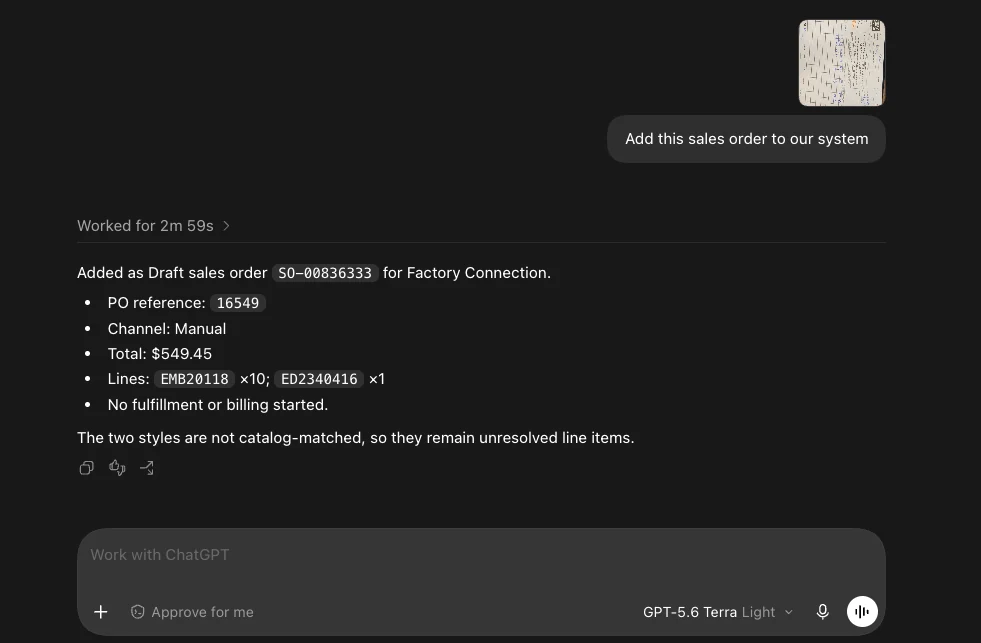
Upload a picture of an order and ask ChatGPT to add it to Convexity. The assistant reads the order details and creates a sales-order record through the connected product tools. In this example, it creates a draft and flags two unmatched items for review. Fulfillment and billing have not started.
Receive orders from Gmail and sales channels
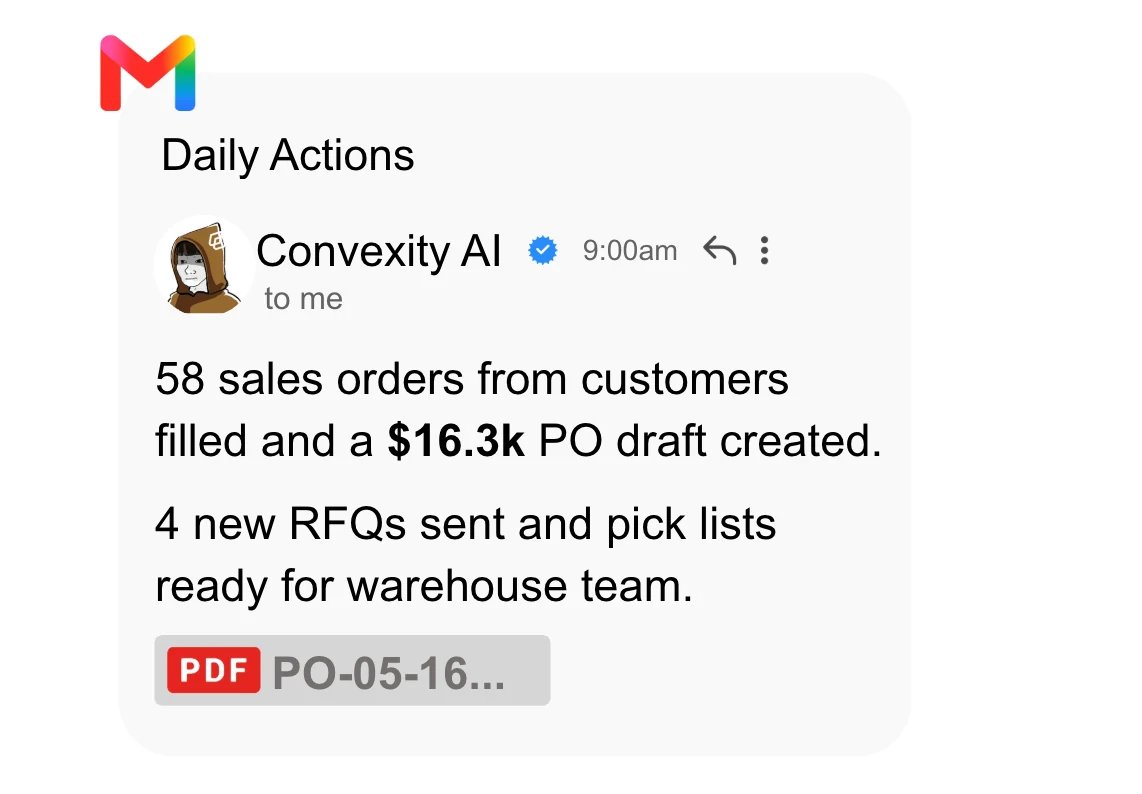
When a customer emails an order to your connected Gmail account, the agent can use the message and attachments to create the sales order in Convexity. Orders can also arrive automatically through connected sales channels. Your team does not have to upload each order by hand.
Channel synchronization brings orders into the system. The agent can help with the work around them. Configure which messages or channel events start a workflow, what the agent may create and which exceptions need a person. Customer, SKU, quantity and pricing checks still matter, however the order arrives.
Build an inventory dashboard by asking a question
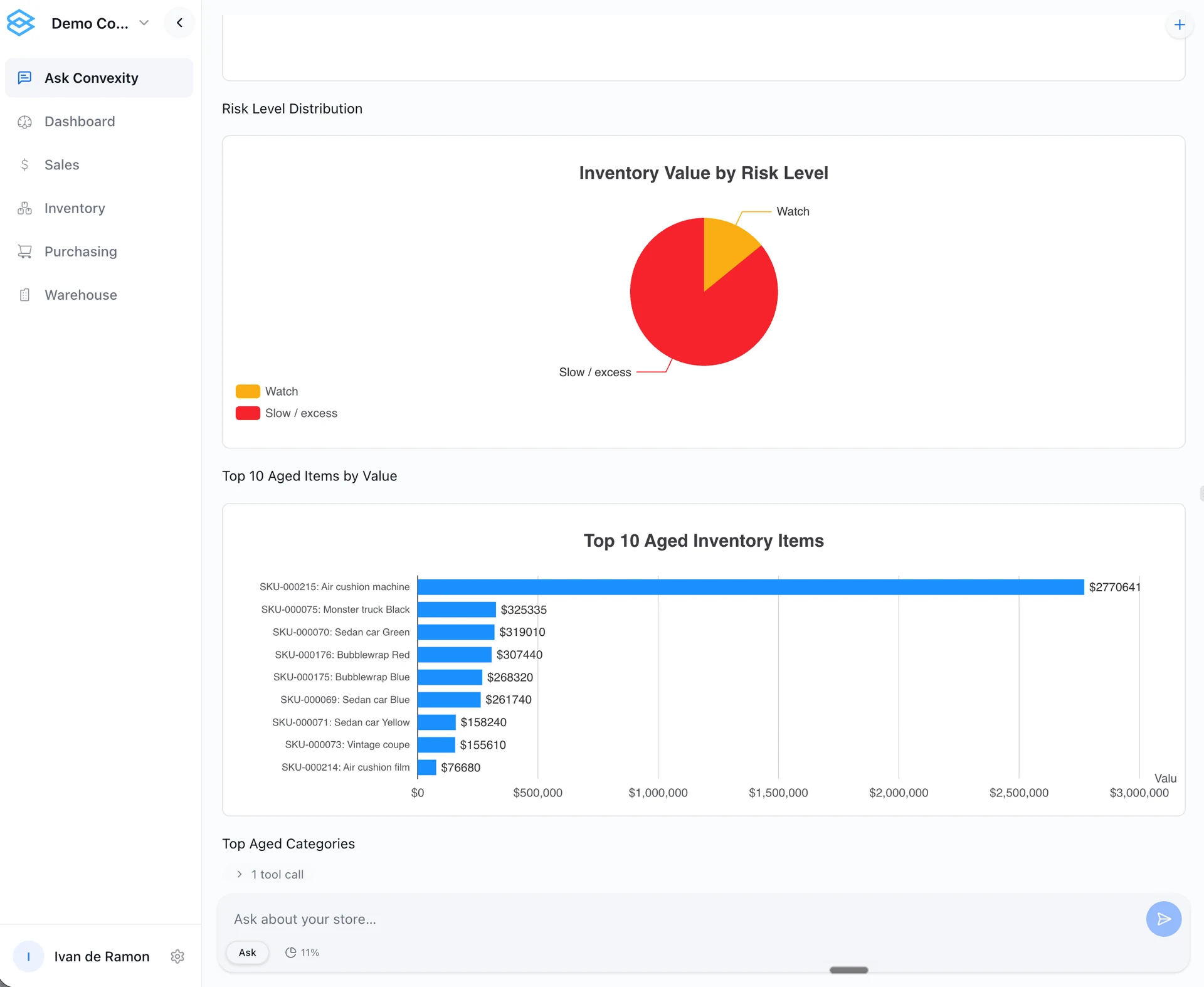
Ask the agent to build a dashboard from your business data. For example: “Show inventory value by risk level and the aged items tying up the most cash.” It can turn that question into charts and item-level analysis. This helps your team see where to look next.
This example is shown in Ask Convexity: inventory value grouped by risk level, next to the highest-value aged items. Use follow-up questions to explore the products behind the charts. Then decide which stock or purchasing actions need attention.
Turn a demand forecast into a purchase
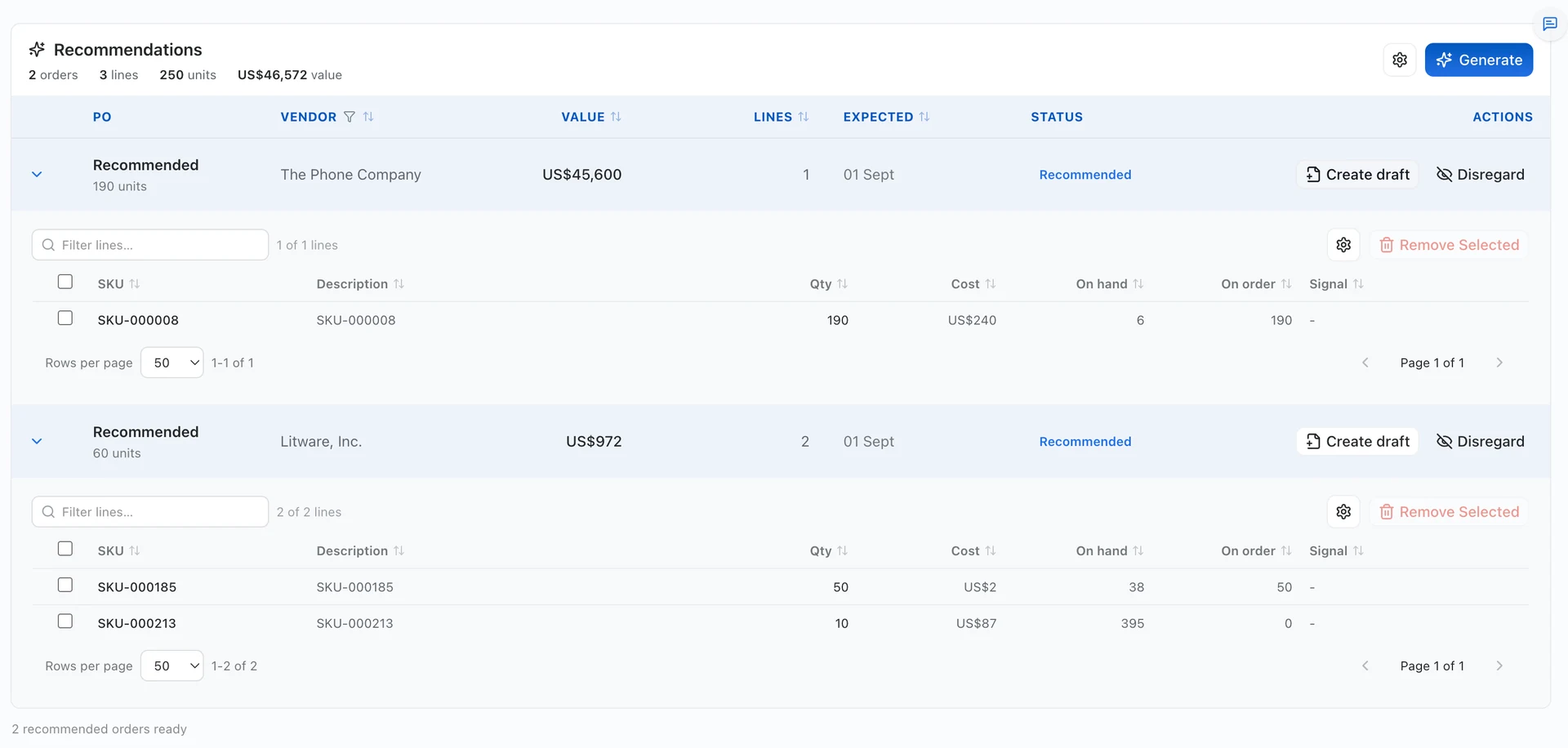
Ask which items could run short before the next delivery. The agent can use forecasts, available stock, incoming purchases and supplier lead times. It prepares a purchase order for review.
Ask what needs attention
For example: “Which items could run short before the next supplier delivery?” The assistant uses accessible inventory and purchasing records to help investigate.
Review the proposed buy
Compare suggested quantities with available stock, incoming orders and supplier constraints. Ask the agent to explain a recommendation or adjust the draft with your instructions.
Create the record
Ask the agent to create a purchase-order draft using the enabled tools. Review the record before you approve an order or allow an external action.
Send RFQs and follow up with suppliers
Ask the assistant to prepare and send a request for quotes using selected items and quantities. It can also email a purchase order or follow up about a supplier’s delivery date. With an authorized email connection, the agent sends the message under your approval rules. It uses Convexity’s purchasing records for context.
Email sending needs a separate authorized connection. Review the recipient and message before sending, or set approval rules for a recurring workflow.
Add products from your catalog
Give the agent your catalog and ask it to create item records. Review SKUs, units and required fields before you use the new items in orders. Missing or unclear details need review.
Start with one repeatable task, then expand
Choose a recurring task such as investigating shortages, preparing supplier orders or building a weekly stock report. Agree which records the agent can access, which changes it may make and where a person approves the result. Expand automation as you validate those workflows.
A recommendation, a draft and a sent order are different actions. Your automation should make that clear and keep your team in control of consequential changes.
Bring one inventory question or repetitive purchasing task. We will show how it works through your preferred AI assistant and name the connections and approvals it needs.
Book a demoFrequently asked questions
Start with your workflow
Bring one inventory, purchasing or order-management problem. We will map the required data, demonstrate the relevant workflow and identify what needs configuration or further validation.
Book a demo